peak
Scaling patient care by redesigning patient and clinician workflows.
00

problem
Peak patients were anxious and confused about their ketamine therapy program. Analysis of 130 care coordinator calls over a 4-week period revealed that: 48% were educational questions that shouldn't require human intervention (appointment prep, credibility concerns, medication guidance, program questions, pricing). Additionally, 29% were no-shows due to unclear preparation. The MVP brand felt cheap and eroded trust - 9% of calls were patients literally asking if Peak was legitimate. This created a care coordinator bottleneck that prevented scaling. Business goal: Improve patient experience and enable the care coordination team to support more users by clarifying workflows, strengthening the product foundation, and modernizing the experience. KPIs: Leading indicators (early signals influenced directly by brand/UX changes): → Care coordinator call volume by topic → First-appointment no-show rate → Patient onboarding completion rate Lagging indicators (downstream business outcomes): → Patient retention (program completion) → Net Promoter Score (NPS)
solution
I led a dual-track redesign: maturing the brand to build credibility, then redesigning the dashboard to eliminate the information bottleneck. Brand maturation: The MVP used basic coral/pink gradients and generic sans-serif typography that felt startup-generic rather than premium wellness. I led stylescape exercises to shift positioning to "Relaxed Refinement" - premium-yet-accessible wellness for millennials seeking alternative treatments. Analyzed Mindbloom, NueLife, Fieldtrip Health, BetterU, and Rain to establish differentiation. Visual shifts: Coral/pink gradients → rich plum/terracotta/sage palette with cream backgrounds Generic sans → refined serif for brand moments + clean UI typography Minimal iconography → natural lifestyle imagery Flat cards → layered cards with improved hierarchy. Brand pillars: Hopeful, Effective, Straightforward. Product redesign: Reframed dashboard as proactive guide rather than transactional portal. Surfaced the top 5 call categories (62 calls, 48%) directly in-app through education flows, appointment preparation, and progress tracking. Analyzed competing ketamine telehealth and wellness apps (Calm, Headspace, Noom) to apply progress-oriented mental model (daily exercises, milestone tracking, encouraging next steps) instead of clinical dashboard. Objective: Enable 1:many scaling by eliminating 48% of repetitive calls and building brand trust that reduced legitimacy concerns (9% of call volume).
Peak offers weekly ketamine therapy for people with treatment-resistant depression and chronic anxiety. Between sessions, patients work through guided therapy exercises to integrate their experiences. Coaches design personalized programs, meet biweekly, and stay in frequent contact. The platform is built for daily mental health practice, not episodic treatment.
Research:
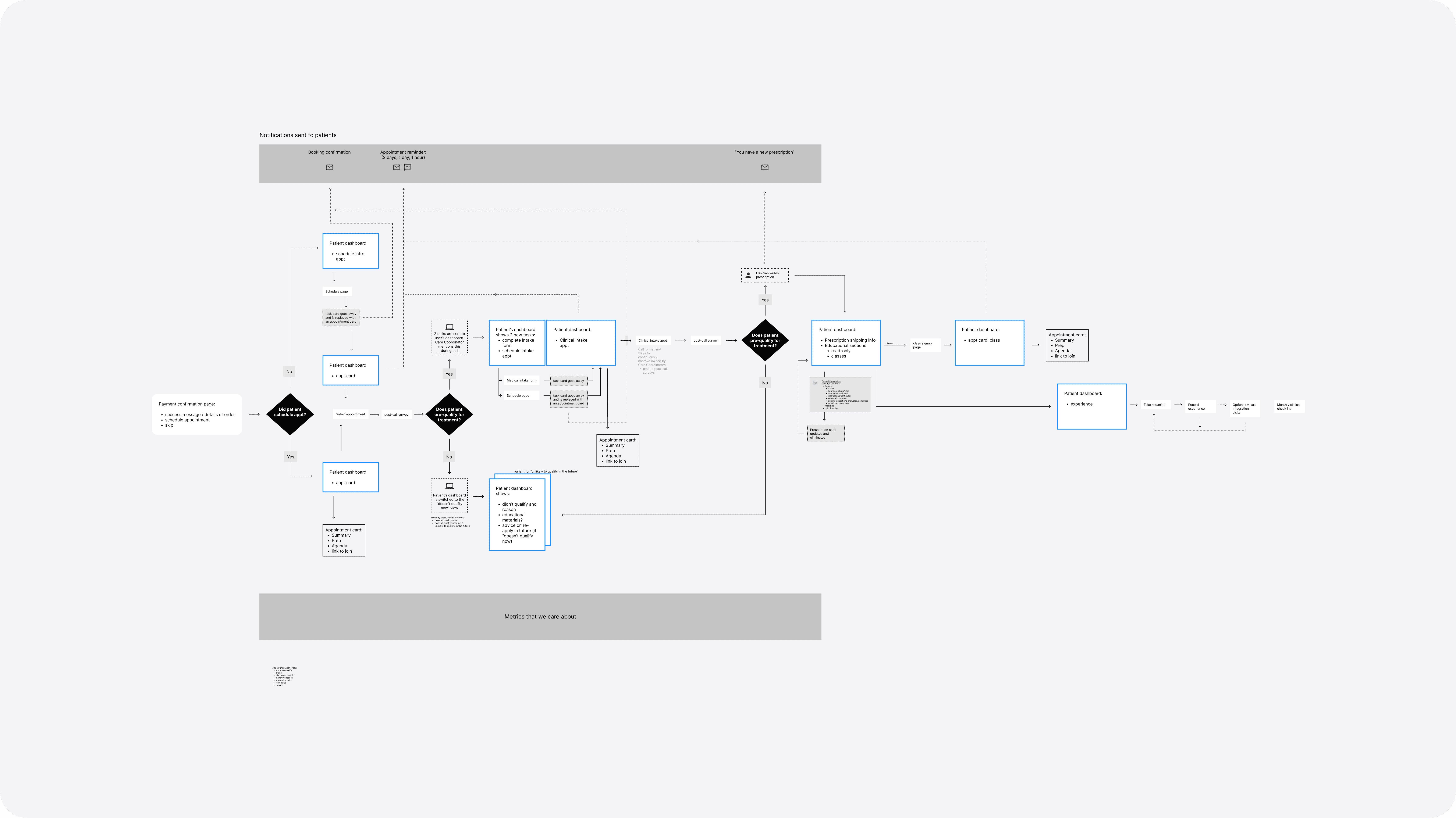
I started with a benchmark study to capture baseline user reactions to the current experience. This gave us a qualitative measure of where we were before redesigning anything. Then I moved into desk research because I knew the company had valuable information scattered across teams. I mapped the customer journey, then interviewed each product manager to understand what they knew about where the experience was breaking—insights, data, assumptions. I talked to customer care and our data team to quantify call patterns.
Analysis of 130 care coordinator calls over a 4-week period revealed the breakdown:
Appointment preparation: 24 calls (18%)
Credibility/trust questions: 12 calls (9%)
Ketamine dosing and experience guidance: 10 calls (8%)
General program questions: 8 calls (6%)
Pricing structure: 8 calls (6%)
No-shows: 38 calls (29%)
Operational issues: 30 calls (23%)
All of this became the foundation for what we designed.
Hierarchy:
We restructured the app's navigation through card sorting with the design team alongside the call volume data. I led us toward ruthless simplification, using care team data to identify where confusion started. The goal was to make core actions immediately accessible and reduce the cognitive load that was driving patients to contact care coordinators.
Instead of scattering related information across multiple screens, we consolidated around patient needs:
Program guidance (addressing the 24 appointment prep + 8 general program calls)
Medication education (addressing the 10 dosing/experience calls + 12 credibility concerns)
Progress tracking (addressing the "what's next" anxiety driving no-shows)
Care team access (for complex issues that genuinely required human support)
Site maps showed the shift from scattered, flat architecture to a consolidated structure where related tasks lived together.
Visuals:
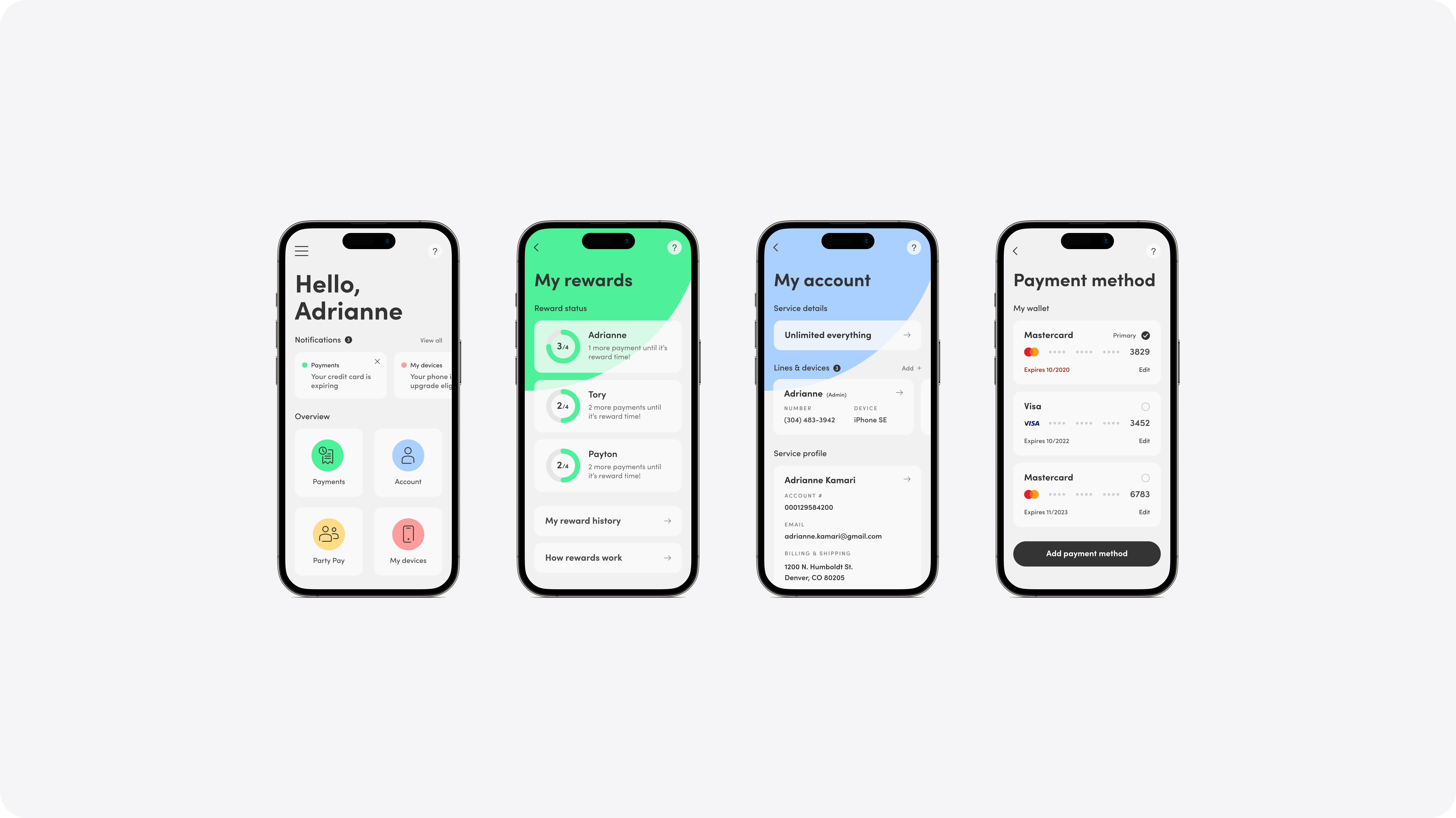
The MVP app (see "before" screens) used basic gradients, standard sans-serif typography, and a limited coral/pink color palette that felt more startup-generic than premium wellness. The experience was functional but lacked the credibility needed to build trust with patients considering a novel mental health treatment.
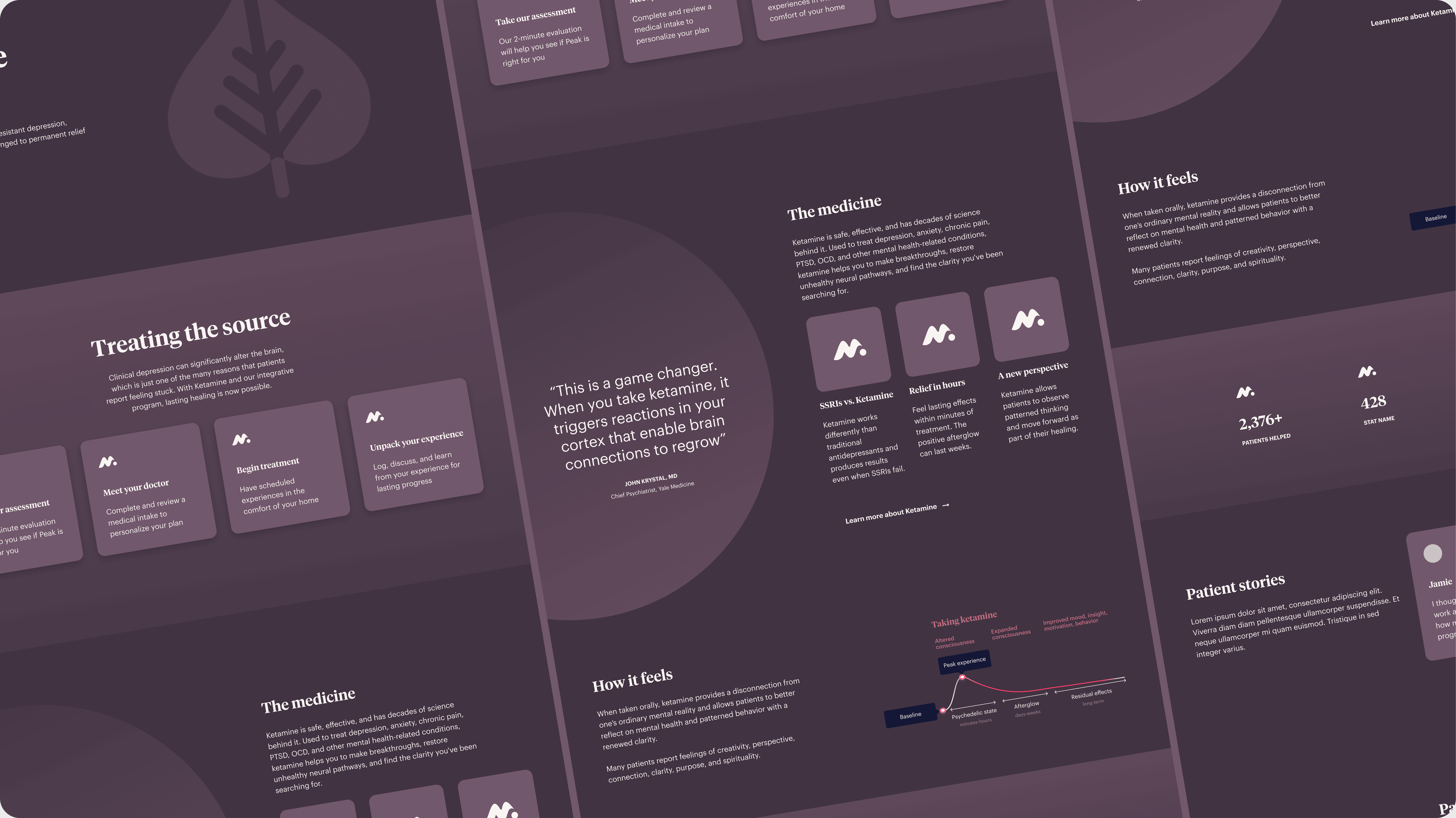
I led stylescape exercises with the founders to establish "Relaxed Refinement" - a brand direction that would signal both expertise and approachability for wellness-forward millennials. We analyzed Mindbloom, NueLife, Fieldtrip Health, BetterU, and Rain (outside category) to identify differentiation opportunities.
Brand pillars: Hopeful, Effective, Straightforward
Visual transformation:
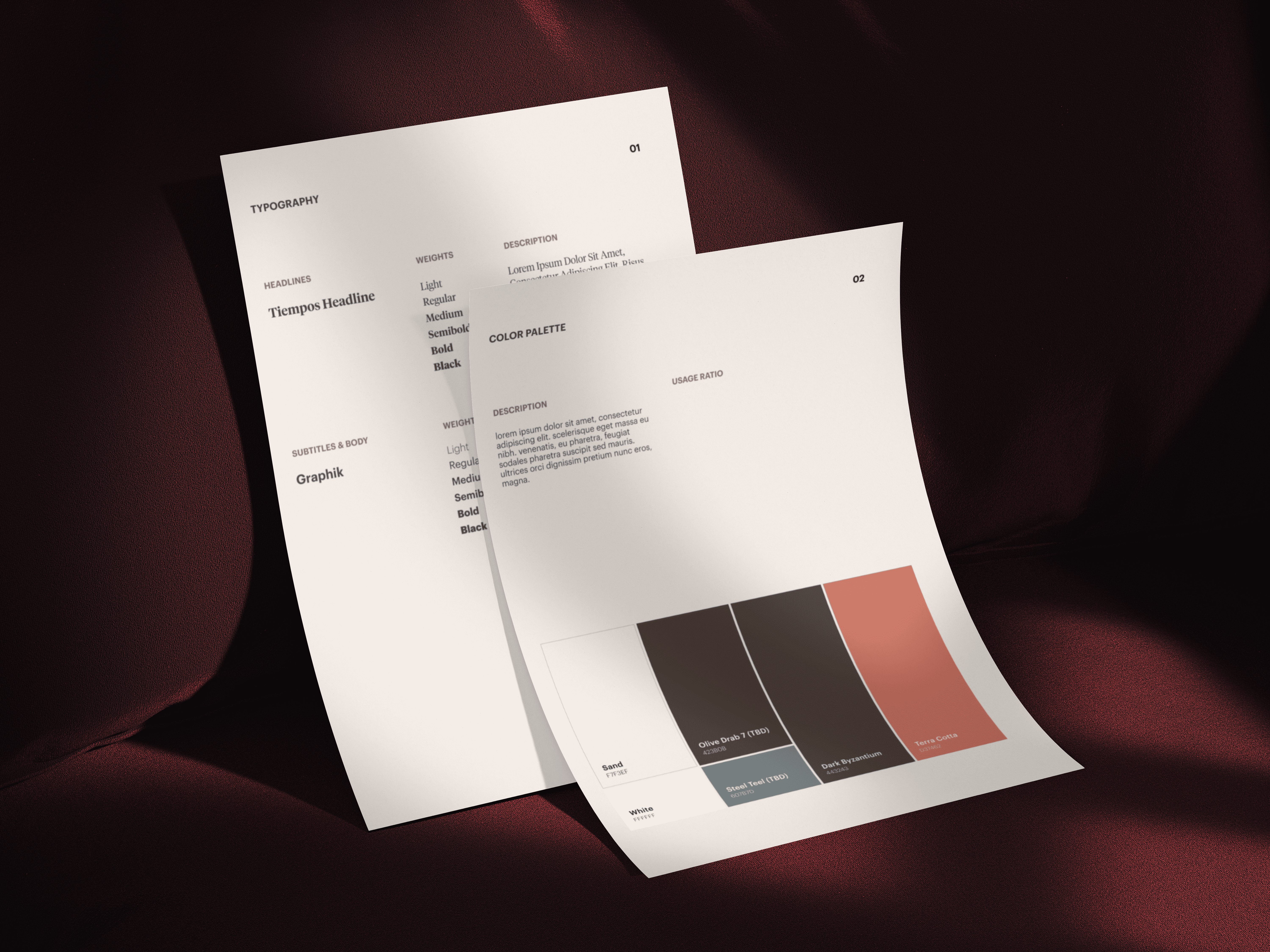
Color: Basic coral/pink gradients → rich plum primary, warm terracotta and sage accents, cream backgrounds for depth and sophistication
Typography: Generic sans-serif → refined serif for brand moments (headers, emphasis), clean sans for UI legibility
Imagery: Minimal iconography → natural lifestyle photography with outdoor/wellness context
Cards & layout: Flat gradient cards → layered cards with subtle shadows, improved hierarchy, generous white space
Early stakeholder interviews revealed they wanted an app that felt "more fun to explore and open multiple times per day"—not just a utility users checked once and closed. I explored how the new palette, refined typography, and card-based layouts could make the experience feel both premium and inviting.
Then I designed the dashboard as a daily mental health practice rather than an episodic prescription service. This mental model came from analyzing wellness apps (Calm, Headspace, Noom) which showed patients responded better to progress-oriented frameworks—daily exercises, milestone tracking, encouraging next steps—than clinical dashboards.
I surfaced program education, appointment preparation details, and medication guidance directly in the app through progressive disclosure and clear "what's next" prompts. The redesign answered the top 5 call categories (48% of call volume) proactively before patients needed to ask, while maintaining the hopeful, straightforward brand tone throughout.
Impact:
The redesign validated positively through user testing and stakeholder alignment. In September 2022, new federal telehealth regulations increased fulfillment costs beyond what the business model could sustain. The pivot timeline exceeded available runway, and the founders wound down operations.
Validated design outcomes:
Eliminated top 5 call categories (62 calls, 48% of volume) through in-app education
Addressed legitimacy concerns (9% of baseline calls) through brand maturation
Created scalable 1:many model vs. 1:1 care coordinator dependency
Shifted positioning from episodic prescription service to daily mental health practice
Planned success metrics:
Care coordinator call volume reduction (expected 40-60%)
First-appointment no-show rate improvement (baseline: 29%)
Daily active usage and session frequency
Want the full, in-depth case study?
View it here →
timeframe
3 months
tools
Figma
category
UI/UX
01
02

03